

Abstract: Joinville is the most populous city in the state of Santa Catarina, Brazil, with a population of over 600 thousand inhabitants. The climate is humid subtropical according to the Köppen-Geiger classification and is characterized by high precipitation. Industrial activities (chemistry, textiles, plastics, metallurgy, and others) play an important role in the city’s economy, which is the largest industrial pole in Santa Catarina and the third in the South region. Despite the economic importance and the presence of anthropic pollution sources, few studies have investigated particulate matter concentrations in Joinville. The samples were collected in the dry period, every three days from June to August 2022 (18 samples). A high-vol sampler was used to collect the particulate matter for 24 hours using quartz fiber filters. The samples were stored under refrigeration until analysis. Pieces of 4.4 cm2 of the filters were extracted by ultrasound using a microextraction device, following the methodology developed by Santos and collaborators (2016). The samples were analyzed by gas chromatography coupled with mass spectrometry (GC-MS). The PM2.5 concentrations varied from 5 to 49 μg m-3 (median 23 μg m-3 ), surpassing the current WHO Guidelines (15 μg m-3 ) in 14 days. Benzo(g,h,i)perylene (BPE), dibenzo(a,h)anthracene (DBA) and benzo(b)fluoranthene (BbF) were the most abundant PAH, corresponding, respectively, to 46, 12, and 10% of the studied compounds. BPE is a marker of gasoline combustion, and along with BbF, is often found in abundance at sites where light vehicle emissions are the predominant sources (PEREİRA et al., 2023). DBA is mainly emitted by industrial activities (TİAN et al., 2021). The diagnostic ratios were calculated to determine the age and sources of PAH. The BaA/(BaA+Chr) and IP/(IP+BPE) ratios indicate that fossil fuel combustion was the main source of PAH, while Flt/(Flt+Pir) suggests the influence of biomass burning in 50% of the samples. Retene, a biomass- burning maker PAH, was detected in few samples. The ratio BaP/(BaP+BeP) indicated the aging of almost all samples. The benzo(a)pyrene index (BaP-TEQ) was also calculated to estimate the carcinogenic risk due to exposure to these compounds. It was calculated by multiplying the concentrations of the carcinogenic PAH by their respective carcinogenicity factors (TEQ) in relation to the BaP (NİSBET & GOULAY et al., 1992). The values found varied from 0.02 to 8 ng m-3 , with 8 samples above the threshold recommended by EPA (1 ng m-3 ), indicating cancer risk. The human respiratory tract model (ICRP) was used to estimate the deposition flux of these carcinogenic PAH in the main parts of the respiratory tract: upper airway (UA), the tracheobronchial (TB) region, and the alveolar (AL) region (Figure 1).
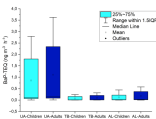
Figure 1. Deposition rates of BaP-TEQ in the human respiratory tract to children and adults.
The model showed that the most of carcinogenic compounds were deposited in the upper airway region, but significant concentrations reached the tracheobronchial and alveolar regions. The exposure of the respiratory system to these pollutants may cause lung cancer, so these results indicate the necessity of more study and control of the pollution in this city.
Keywords: Air pollution, Particulate matter, PAH, Health risk

June 6 @ 10:10
10:10 — 10:25 (15′)
Room 2
Pérola de Castro Vasconcellos (DQ/USP – Brazil)